Why I Support a No-Recline Policy on Airplanes


We are not wholly-individualized beings living in our own orbit; our actions can have negative externalities for those around us. 

In a new survey conducted by The Harris Poll, a shocking 41% of Americans said that they supported a ban on reclining seats on airplanes. 

I am, proudly, one of the 41%. 

Seat-reclination does not happen in a vacuum. It was, in fact, Kamala Harris who in 2023 remarked that "None of us just live in a silo. Everything is in context." 

(Read my post about "coconut-conservatism" here.)

So, being that we live in a context and are not, as Amitai Etzioni would say, "individual, free-standing agents," why do we care so little for our fellow travelers? 

I, being a 6 ft 3 in male, have a special disdain for airplane seat reclination. It is already a tight squeeze in there; to have the person in front of you recline their seat can make sitting comfortably nearly impossible. 

I recall one particularly awful flight from Arizona to New York. It was a red-eye (a flight that departs at night, and arrives in the morning) and I was already running on little sleep. Upon sitting down, the lady in front of me decided to, in an especially gratuitous fashion, recline her seat back. I was crammed, almost comically so. My legs had no choice but to rest in the aisle, occasionally being knocked around my the snack cart. For the duration of that flight, I was unable to get a wink of sleep; it was five hours of misery.

Now, you may ask: Why didn't I say anything? Why didn't I speak up?

It's a good question. I am not one for confrontation, especially in tight, public spaces. Plus, no one wants to be a Karen. 

Earlier this year, a couple boarding a Cathay Pacific airplane, traveling from Hong Kong to London, was banned from the airline for making a stink about a passenger's egregiously reclined seat. The couple's response to the selfish passenger, which was obviously wrong and wildly inappropriate (see video here), raises the question of whether allowing people to recline on flights, especially shorter, domestic ones, is a sustainable practice. 

I think that we ought to remember that we are, as Etzioni wrote, "not merely rights-bearing individuals but also community members who are responsible for each other." Let us act more in this way. 

How Do You Dress?


You'll find varying degrees of dress - or dressiness, if you like - on the political Right. 

Claremont fellow, Michael Anton, I am told, is a fastidious dresser. This is evidenced, not just by anecdotes I've heard from colleagues, but by pictures of the man himself.


He looks more a member of the Dave Brubeck Quartet, than a conservative academic. 

Similarly, Roger Stone, a beyond-eccentric fellow, with his rather unsettling back tattoo of Richard Nixon, has always been something of a men's fashion influencer. His - what looks to be defunct - fashion blog, Stone on Style, used to feature an annual "Best and Worst Dressed" list, wherein Stone, with what appears to be a well-trained eye for classy dress, celebrates and lambastes the looks of contemporary stars and television personalities. 


Some on the Right, however, prefer a more relaxed, or rather, shabby look.

I was intrigued by one of Jude Russo's blog posts for The Lamp titled New Pants. In it, Russo walks us through his rather limited and quickly fraying wardrobe, which he is more or less unbothered by. "Shabbiness," he explains, "isn’t exactly a choice so much as a comfortable and habitual way of life." Interesting... He goes on to say that "there is nothing softer than a pair of chinos that is about to disintegrate."

I'm thinking of one particular blazer that I own. A blue one. It's comfortable and well-worn, though the inside pocket isn't a pocket at all; it's a hole. I sometimes forget this, only to lose my pens in the abyss of the fabric. 

One of my work colleagues, who is something of a William F. Buckley Jr. expert, tells me that Buckley would throw a blazer over just about anything. He also told me that, as the years went on, the knot on his ties got looser and looser. 

Personally, I quite like the blazer-over-anything approach. It reminds me of Hugh Laurie in House.


Of course, what we wear and how we present ourselves is the first thing that people pick up on when they scan your person. So, even a fraying blazer over a schleppy shirt looks better than the schleppy shirt by itself. 

Anyway, I'm curious: how do you dress?

Do You Believe in Life After the Election?


We can't let this election - or any subsequent elections, for that matter - tear us apart. 

Our great nation has endured for nearly 250 years, and we will endure past this election, whether Trump or Kamala wins. 

Don't fall for the hyperbole that "democracy is on the ballot," That is utter nonsense. 

Everyone take a deep breath. 

I am, however, very much concerned by the unwillingness of people with disparate ideological perspectives to converse civilly with each other. Political division can, sadly, be our country's death knell. But only if we let it...

We must make a concerted effort to see the humanity in everyone, from the MAGA hat-wearing Trumper, to the pro-Kamala, liberal Democrat. Even the Zionist waving the flag of Israel must, at some point, see the good in the student protestor donning her watermelon pin and keffiyeh. 

All of this may seem radical, utopian, and naive, but I don't care. If we cannot treat each other with love and grace, we will definitely come apart. 

I'd like to share with you some examples of people - with a lot more influence than me - who have conveyed similar sentiments of national unity. 

Former Democrat Presidential candidate Marianne Williamson has been a great unifier. 

See here:

I could not have said this better. 

Princeton University professor Robert P. George, a conservative whom some know for his friendship with left-wing political activist and third party Presidential candidate Cornel West, lays the groundwork for how we can be friends with people "with whom we have deep moral and political disagreements."

Pennsylvania Governor Josh Shapiro, too, has been sounding all the right notes regarding political polarization. We all remember that horrific day at a Trump rally in Butler, PA when a disturbed gunman fired shots at the former President, killing volunteer firefighter Corey Comperatore, who was, by all means, a patriot. 

Shapiro, during a press conference, remarked that "Corey was an avid supporter of the former President, and was so excited to be there last night with him in the community... Corey was the very best of us. May his memory be a blessing."

I was emotional watching this. But I wasn't alone. 

For a long time, I've been a religious listener of Robert Wright's Nonzero podcast. I was taken aback to see Mickey Kaus, Wright's former co-host, on the verge of tears when recounting Shapiro's beautiful remarks. 

Skip to 23:40 HERE.

J.D. Vance, to his credit, was exactly right to say that we would be terribly mistaken to "cast aside family members and lifelong friendships. Politics is not worth it."

And the Harris campaign, to their credit, released what I thought was a brilliant ad. In it, Kamala says that "the vast majority of people in our country have so much more in common than what separates them... We see, in our fellow Americans, neighbors, not enemies." 

There are, I'm happy to report, myriad examples of this spirit of depolarization that I've found on the web. 

The sanguine notes are, however, drowned out by a cacophony of negativity and disdain. X, especially since Elon's takeover, has become a sort of internet Wild West, where hateful voices, motivated by likes and impressions, are more visible than accounts promoting national unity. This is troublesome, but It is a reality we must come to terms with, at least for now. 

What you can do, however, is unfollow hateful and divisive accounts, and follow thoughtful accounts that don't engage in cheap attacks and demagoguery. Folks like Dean Phillips, Andrew Yang, Sohrab Ahmari, Robert George, Marianne Williamson, and others inspire optimism. Follow them. 

Again, there is plenty to be hopeful about, no matter who wins on Tuesday. We must, though, drop the platitudinous bickering and didactic rhetoric. There is humanity and love in all of us. And I mean all of us. 

Communities that shun pluralism inevitably become tribal. We can't let that happen. 


Fundamental Values

Don't let politics ruin good things. 

With the Presidential election just two weeks away, this is especially salient advice. 

Over the years, I've lost many friends due to ideological differences. Many of my right-of-center friends have also encountered this. 

I refuse, however, to give into toxic polarization; if we let trivial political differences fracture good relationships, we will, ultimately, come apart as a country. 

Remember: we have, in some capacity, always been politically pluralistic. The Jeffersonians and the Hamiltonians; Whigs and Democrats; Democrats and Republicans; libertarian-oriented Republicans and their paleo-conservative counterparts. I can go on and on... 

One's own politics - which, if you are anything like me, are constantly evolving - should be of little import. There is only one thing that we should take into consideration when it comes to relationships: fundamental values. 

Earlier today, I read a beautiful piece by David Spereall in BBC.  He tells the story of a group of Englishmen who, since 1968, have been meeting for pints every Thursday. That's 56 years of regular meet-ups! Can you imagine that?

Even during COVID, the group continued their tradition via Zoom. 

But, what about the political make-up of this group? Are they ideologically monolithic?

"Everybody is different, " one of the ole blokes remarked. "We have incredibly contrasting political views, which leads to the most incredible, illogical arguments."

So, that should be it, right? A politically diverse group could never possibly endure in the long-run! Well, according to Brian, "We are quite different people but I suspect we’ve all got the same fundamental values." Huh... Could this be?? "If we argue with each other, it’s not about critical things."

What do ya know, it looks like people, whether they be Labour, Conservative, Democrat, or Republican, can actually get along just fine. 

But, this begs the question: what are these fundamental values that trump political trivialities? Well, I can give you my answer: respect for animals, the surrounding community, and me. That's it. If someone holds doors for others, tips their waiters and baristas, refrains from any sort of littering, and cares for God's creatures, that's all that matters to me. Their views on immigration or economic policy, on the other hand, are utterly meaningless, albeit potentially interesting.

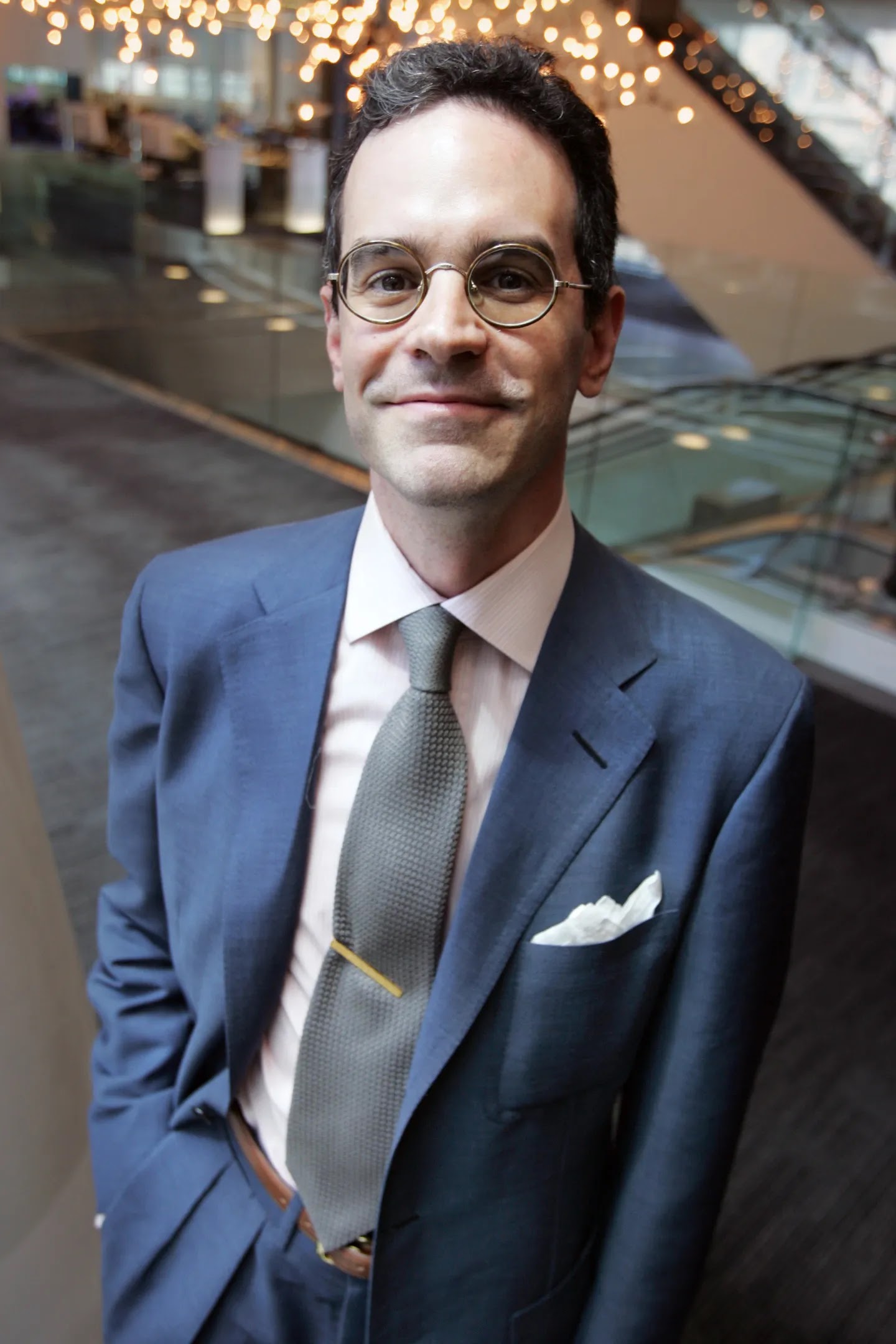
Speaking of political depolarization, I was actually profiled by photojournalist Paola Chapdelaine in the Guardian last week. See here. She did an awesome job. 

The Need for High-Quality Public Spaces


The importance of robust public spaces cannot be overstated. 

I've always believed that the quest for social connection was, first and foremost, something that had to come about through a sort of internal spiritual awakening. That is, a collective understanding that we can not go it alone as purely self-maximizing individuals; we need each other. While I still believe that to be true, I do think that, in the past, I've downplayed the vital role of external environment and the affects it can have on us as social creatures. 

People-friendly spaces, as opposed to sterile spaces devoid of engaging amenities, can facilitate social connection and much-needed weak-tie relationships. 

It's pretty intuitive, actually: if people are not physically around each other, their prospects for social connection are not very good. 

Public places in and of themselves, however, are not enough to combat our current plague of social atomization. 

As Shawn McCaney writes for Governing, people need more "high-quality public places where Americans can connect." The operative word here being, high-quality. 

A high-quality public space must have eclectic amenities, robust programming, places to sit and converse, and walkable paths. Perhaps most importantly, these spaces must be maintained. Many of the parks and baseball places I used to frequent with my father when I was a child, for instance, are now unkempt and encumbered by weeds. This is an example of a low-quality public space. 

Other communities, however, have re-purposed dormant and abandoned infrastructure, turning them into vibrant and fecund social spaces. 

McCaney uses the example of Philadelphia's new Rail Park, an erstwhile railroad viaduct that had been left unused and functionless since 1984.  Now, thanks to community efforts and innovative design, it is a place to connect and unwind. 

Philadelphia's Rail Park

Though the park is only in phase-one of its rollout, it is already offering exciting events, including a "Three Mile Vision Tour," which aims to explore the "past, present, and future of the Rail Park, highlighting the potential for this project to connect thousands of Philadelphia residents and visitors to green space and each other." 

You can find a 9-minute YouTube walk-through of the Rail Park, with it's unique swinging benches, here. 

We need more spaces like this that are conducive to connection. It will require inventiveness, a willingness to re-purpose unused infrastructure, and active community-backing. Cities across the country, fortunately, are proving that civic life can be restored. 

The Appeal of Neo-Luddism


I, like you, have a smartphone. Sometimes, though, I wish I didn't. 

Up until my sophomore year of college, I used a Verizon Octane, a neat little flip-phone with a horizontal keyboard. 

Verizon Octane

Being a student in 2016, however, required me to use certain apps which I was unable to access on my clunky dumb-phone. So, out of necessity, I caved and purchased an iPhone SE. I was soon addicted. I downloaded every app from Instagram and Facebook, to games like Plants v. Zombies and The Sims. I have, like so many other people my age, become tethered to my phone. 

But not everyone has capitulated.

In an article for The Lamp, a thoughtful Catholic publication, Peter Tonguette describes himself as a "proud, almost-exclusive user of landline phone-service." It is mystifying to think that, in 2024, people can function without a smartphone. Peter doesn't disdain our contemporary smartphone culture; he just finds no need to abandon what is tried and true: the ole landline. 

To be sure, there isn't much you can do with a landline: you can call, leave voicemails, and... well that's pretty much it. 

But Peter doesn't need all the frills of new technology. He is perfectly content with the reliability of the one-feature phone. 

What's more, those who choose to forego smartphones - or at least prevent their intrusion into every aspect of our daily lives - exist in the moment in a way that we, the smartphone-using masses, are not. I - again, like you - am guilty of firing off text messages or checking my email while out with friends. In fact, there is a word for this activity: phubbing. Look it up!

Peter, on the other hand, is not at his phone's every beck and call (no pun intended.) "When I am away," Peter explains, "I am truly away."

Peter's two phones are in his office and the entry way of his home. Impressive. 

Phone-tower

While it is, I think, pretty unrealistic for us all to revert to landline use only, I do think there is some merit to leaving our smartphones stowed away and out of site for prolonged periods. Maybe, during your commute to work, try reading a physical book. Or, when out to dinner with your friends, start a phone-tower. That's when everyone at the table stacks their phones on top of each other. 

It's worth a shot!


Loneliness v. Solitude


It is important that we do not conflate loneliness and solitude; while the former connotes a sense of yearning and discontent, the latter describes a much-needed time of introspection and recombobulation. 

A good communitarian will strike a healthy balance between extroversion and self-reflection. Without ample time to engage in solitude, we deprive ourselves of essential cognitive development. Before we express our outward-facing selves to others in the realm of civil society, we must first work to better understand and enhance our inner-beings. While the practice of solitude may seem simplistic, it can actually be quite arduous, requiring the self to, at times, drift into boredom and embrace that boredom as a naturally-occurring and integral component of being happily alone. 

Sherry Turkle - in her important book, Reclaiming Conversation - writes that, "children can't develop the capacity for solitude if they don't have the experience of being 'bored' and then tuning within rather than to a screen." 

Today, though, many of us are incapable of embracing boredom. We are ensconced in a perpetual state of sensory stimulation. By fidgeting and turning to our phones when we feel boredom creeping up on us, we shirk a feeling that may be, at least initially, uncomfortable. 

We must force ourselves to sit still. 

By sitting still, without the aid of our iPhones, we can activate our creative minds. Conversely, when we watch mindless Instagram Reels - which, in full transparency, I've been known to do for extended periods - we put our minds to sleep. In small doses, this is harmless; in large doses; it will surely retard our social selves. 

You'll notice that none of this connotes loneliness, but rather, contentment with time alone. While loneliness is something we've all felt, it is an unproductive state of being. When we are lonely, we seize to be in the moment and, instead, hyperfocus on what is, at least temporarily, unattainable. We yearn for what we don't have: company and companionship. 

The distinction between loneliness and solitude is an important one, but we've all experienced both. 

Please tell me: What are some of your solitary activities? 

Caring for Our Fellow Citizens, Just Like Hamilton Did


How can we truly become, as the late Amitai Etzioni put it, a "community of communities?" Or, put differently, how can we reclaim a kind of patriotism that engenders feelings of togetherness and societal cohesion? 

In an essay for the September/October issue of Foreign Affairs, Walter Russell Mead extols the virtues of a Hamiltonian-inspired patriotism. "Then, as now," Mead writes, "Americans must embrace a duty of care toward one another... And just as individual Americans have duties and ties to their family members that they do not have to the public at large, they have obligations to their fellow citizens that do not extend to all humankind." 

Conservatism today, in contrast to the kind of small-c conservatism embraced by Hamilton, is too often conflated with a obligation-free libertarianism. While the former puts emphasis on responsibility and duty, the latter jettisons all of that in favor of maximum autonomy and un-ordered liberty. 

A country of individuals pursuing their own self-interest without any conceptualization of the common good, however, will further fragmentate. We will continue to see our fellow citizens as strangers with little in common, save the pursuit of material maximization. If there is to be no spiritual re-evaluation of our civic priorities, we will descend into a Southern Italian-style amoral familism. 

"Hamilton," Mead continued, "risked his life for a nation that was just being born." But are we, nearly 250 years later, still determined to preserve this awesome inheritance through civic duty and a shared sense of patriotism? 

This will, firstly, require us to see each other as neighbors in a common fight for the creation and preservation of community. And, secondly, to view each other, not as ideological combatants, but as members of a uniquely pluralistic family. 

I'll admit, I was encouraged to see myriad displays of the American flag and chants of "U.S.A." at the Chicago Democratic National Convention. Democrats, I think it's fair to say, have wrestled with, what I call, a "patriotism problem." That is, they are often characterized as having an overly critical view of America, one that can almost be seen as disdainful. 

Here is a video of Ella Emhoff - daughter of Doug Emhoff and Kamala Harris - affectionately referring to her father as "Mr. U.S.A." 

This is a positive development. I hope it is sincere. 

Reclaiming Hamilton's vision is, I think, well within our ability, but it will require work. 

Some of my friends and colleagues, while appreciative of my writing on communitarianism and de-polarization, think this is all pie in the sky. I think they're wrong. Though I agree that we are at an emotionally over-wrought place in our shared American story, I do believe that there are greener pastures ahead. 

Give it time and patience, my friends.   

Raj Chetty and Economic Mobility


Raj Chetty is an unsung hero. 

When it comes to the area of social capital, his exhaustive and trailblazing research is unmatched. 

My first article for National Review, Conservatives for Community, written in August of 2022, was inspired by Chetty's study on social capital and economic mobility in Nature. 

To quote myself:
The study, which breaks down social capital into three categories — economic connectedness, social cohesion, and civic engagement — found that children have a much greater chance of being upwardly mobile if they reside in communities with high levels of “economic connectedness.” Economic connectedness (EC) refers to the integration of people from different economic backgrounds. The study concludes that levels of EC vary depending on one’s geographical residence. Impoverished inner-city areas, for example, have remarkably low levels of EC, since most residents occupy the same socioeconomic stratum. Conversely, an area with a healthy combination of high-income and low-income residents increases the odds of economic success for low-income individuals.

While this was eye-opening to me at the time, I had no idea that Chetty had been a prolific researcher in this field for years. 

I recently finished re-reading J.D. Vance's magnum opus, Hillbilly Elegy (a book that is especially pertinent now), and was surprised to find mention of Chetty's work from 2014:

In a paper analyzing the data, Chetty and his coauthors noted two important factors that explained the uneven geographic distribution of opportunity: the prevalence of single moms and income segregation. Growing up around a lot of single moms and dads living in a place where most of your neighbors are poor really narrows the realm of possibilities.  

Chetty - and this was less surprising - was also cited in Robert Putnam's Our Kids, probably my favorite of Putnam's books. 

I actually had the opportunity to see Chetty speak in-person earlier this year when the Royal Society of the Arts awarded him their Benjamin Franklin Medal for his years of paradigm-shattering work. Chetty - with the aid of some instructive PowerPoint slides, chock-full of exciting new data - reinforced his thesis that economic connectedness is, in fact, the key explanatory factor for upward mobility. Other types of social capital, he explained, were less important. 

Vance, by explaining Chetty's thesis about economic mobility in layman's terms, really drives the point home: When everyone around you is impoverished, it is very hard to escape. When individuals of lower socioeconomic status forge connections and relationships with others of higher socioeconomic status, conversely, it is hugely advantageous to the former group. The later brings a lot to the table: professional connections, robust social networks, and a culture of hard work and high expectations. 

The bottom line is that social connection is a powerful tool. Individuals do not exist in a vacuum; we are, inherently, a apart of our environments: our families, friend groups, professional networks, and so on 

Not even the most ideological libertarian actually thinks we can go it alone. 

Coconut Conservatism and Communitarianism


Is Kamala Harris channeling her inner-Amatai Etzioni? Let's take a closer look...

Harris is known for being a rather confounding orator. Often times, it does appear as if she is trying her hand at a sort of avant-garde slam poetry. Former President Donald Trump - whose name I don't believe I have written before for this blog - quipped in an interview with Tucker Carlson that Harris "speaks in rhyme." This, I think, is an apt descriptor of her unorthodox rhetorical style. 

But perhaps we ought to give her some credit. Maybe she is actually saying something?

Andrew Day, a staff writer for Robert Wright's Nonzero Newsletter, has pioneered a new term that I think beautifully encapsulates Harris's elusive ideological disposition: Coconut Conservatism. 

Day explained, rather convincingly, that Harris's now-viral remarks about falling from a coconut tree are oddly reminiscent of a Burkean, small-c conservatism, or, put another way, communitarianism. 

Crazy as it sounds, I think there might be something to this...

Day:

She was expressing a pretty conservative insight. It's not like left-wing collectivism; it was more like right-wing communitarianism. She was talking about how we exist in a context and how, if you want to help young people, you have to be aware that they're not just individuals; they're shaped by their families and by their educators, so it's like a whole communal framework. 

Kamala's diatribe about context and place could have easily been said my Amitai Etzioni, Yoram Hazony, or Patrick Deneen, albeit much more eloquently. 

This, however, wouldn't be the first time a Left-winger has tapped into the small-c conservative framework. Last year, I wrote a post about Marianne Williamson's communitarian streak. 

Do you recall this exchange between Williamson and Fox News personality Sean Hannity? Skip to 6:00...


Williamson very aptly explained that "we don't feel deeply at home on a spiritual level on this planet because this world is not based on love the way it should be." This, too, is communitarian. 

Libertarian-oriented conservatives, who often come across as cold and overly individualistic, can learn a thing or two from Harris and Williamson.

Coconut Conservatism is the future...


Why America Needs The Ten Commandments to Return to the Public Sphere


To any casual observer of contemporary American politics, it is clear that the United States is at a serious cultural crossroads. In the figurative sense, America today is like a ship without a sail or a vessel without a destination. Historically founded upon Enlightenment-Era principles rooted in Judeo-Christian values, the country prospered socially and fiscally primarily due to the virtuous characteristics of many communities comprised of families and individuals who sacrificed and contributed for the greater good. While changes have been gradually occurring in American society over the last six or more decades, the realities of social decline within the nation are today arguably at their most glaring point in history. This deterioration is, at root, most visible at the "micro" level- in family units and individual households, communities and states. Make no mistake: these various "micro" spheres of social composition are not small in relevance or weight- in fact, they guide the "macro" trend, or the larger diagnosis of the cultural health of the nation. In my recently published book, American Restoration, the vital importance of the American community is discussed among other things when examining the cultural deterioration that has occurred in the country over the last several decades. Ultimately, the health of communities consistently erodes in any society when the social, fiscal, and moral integrity of the families that comprise them declines as well.

One glaring statistic that cannot be ignored is the near-death of the American nuclear family. The "nuclear family" unit was the dominant traditional familial social structure that existed in the United States from its conception through the near-present and in much of the western world throughout history. In this structure, two parents (typically a husband and wife) live in a single residence with one or more children. According to statistics published by Pew Research in a 2023 report, in 1970 67% of American adults aged 25 to 49 lived with a spouse and at least one child. By 2021, that number had declined to only 37%. Yes, at present, the majority of Americans no longer live in a Nuclear Familial Structure. Marriage rates have also declined precipitously, and less and less young people are getting married- these realities are outlined in a recent report published by the National Center for Family and Marriage Research. 

One might ask: Why does this matter? Is it really that "big of a deal" if most American children grow up in single parent households? Many young Americans today put an increasingly small level of importance on traditional family structures. According to a report conducted by the Institute for Family Studies in 2022, only 30% of Americans who are college educated and liberal in political affiliation believed that children were better off if they had two married parents. In stark contrast, 91% of conservative-leaning individuals with a college education believed children were better off in this regard. These realities demonstrate the growing cultural divide in the United States, and the increasingly prevalent reality that vast cultural differences are exacerbating in the country. America can no longer boast that its collective body of people- the citizenry- subscribe in strong majority to a uniform set of shared moral and social values. This great fragmentation within national society all starts at the family level. 

The truth of the matter is, objectively speaking, most children that grow up in a two-parent household are more likely to enjoy stability which in turn benefits them greatly when taking into consideration academic and behavioral growth and achievement over time. A child who not only has the nurturing hand of a mother to guide and encourage them but also the stern, masculine influence of a father who will lead with "tough love" and honest criticism is objectively at an advantage to the individual who may only be raised by a single parent. Single-parents often lack the time or resources that two-parent households can dedicate to a child due to the subjective realities of the situation they are in. While these statements are generalized and made in a broad sense (the writer does not mean to imply that single-parents are incapable of providing a stable and secure upbringing for children), they do hold truth. Research strongly suggests that two-parent households are strongly linked to the well-being of children in fiscal, social, and emotional regards. In the aforementioned publication released by the Institute for Family Studies, a study was referenced that showed that social misbehavior in an educational setting was twice as common amongst children living with separated or divorced parents compared to those living with married parents. This study also reported that 40% of Millennials (individuals born between 1981 and 1996) who grew up in a two-parent household achieved academic success and graduated college by their mid-20's in comparison to only 17% that came from broken households. 77% of Millennials who grew up in two-parent households reached "middle class" or higher in terms of socioeconomic status by their mid-30's, while  only 57% of those who grew up without two-parents in the home reported the same. 

If the United States is going to return to a place of socio-cultural stability and relative prosperity in average communities across the nation, it must begin with the revival of the individual family unit. Families were and still are the driving forces behind the vibrancy of neighborhoods and communities, and individuals that comprise these communities contribute to societal stability and generate meaningful change. Historically, the traditional American family operated within a Biblical structure. The Judeo-Christian values that formed the bedrock of American culture at the political and social levels even when the Republic existed in its most nascent form in the 1780s (and even prior) were the ethical guiding forces for the American family unit and every citizen. At root, the choice to subscribe to these values was an individual choice; that person could choose to follow the moral principles outlined in the Christian and Jewish faiths, or they could not. While many people did indeed live non-virtuous lives, in previous years however, communities across America boldly adhered to these objective moral principles in the public sphere. People had a strong incentive to abide by these principles- if they did not, consequences often followed. By setting objective moral standards for what was deemed right, and what was wrong, American communities had a clear, concise ethos for all to follow. For example, in years past, it was quite taboo in many American communities for people to act in unruly ways in public. The excessive and open use of profanity was highly frowned upon, individuals (especially women) were expected to dress modestly and to lead faithful, non-promiscuous livelihoods. The consequences for such behaviors that went against these expectations (while not always legal in nature) were often social. A persons reputation mattered greatly in close-knit communities like small towns or tight city neighborhoods, and once that reputation was tarnished in a serious and legitimate way, the repercussions were often irreparable. Today, there is no longer a "built-in" deterrent for questionable or improper personal conduct in many communities across America because there is no longer an objective standard of morality that exists in the nation in a large sense. In truth, America has increasingly become a society based around "moral-relativism" and subjective notions of morality. Moral relativism can be defined as the idea that there are no objective or absolute moral principles. History has shown that this never ends favorably- in societies that have moved away from the objective adherence of Judeo-Christian values and the objective sense of public morality that these values provide, horrific atrocities have often been committed (Nazi Germany, Soviet Russia under Stalin, Mao's China, etc). 

Make no mistake- the writer is not calling for a unification of church or state, or for a "forced" conversion of Americans to Judaism or Christianity. What must be said, however, is that America is a nation founded on Judeo-Christian values, and throughout national history these values provided the figurative pillars of social, political, and cultural support that allowed the nation to thrive. In the simplest of terms, these values can be outlined through the Ten Commandments which are found in the Hebrew Bible (the Torah) and the Old Testament in the Christian Bible. Appearing in distinct Books (Exodus and Deuteronomy), these commandments were (according to Christian and Jewish tradition) given to Moses by God at Mount Sinai after he delivered the Israelites from slavery in Egypt and established a new covenant (or social agreement) with God. These commandments were then, and are still today, rules to abide by in order to lead a virtuous and moral life. For thousands of years, nations across the western world have socially operated in at least a general adherence to these commandments as they set  objective standards for what is right, and what is wrong. These commandments along with the seven deadly sins (pride, greed, lust, envy, gluttony, wrath, and sloth), defined in 375 A.D. by the Christian Monk Evagrius Ponticus created a uniform and universal notion about righteous and unrighteous living for societies to follow. This created a "cement-like" foundation, and individual adherence was paramount; for if one did not follow these commandments and routinely engaged in ethically questionable activities, they were not only hurting the community and their families, but God himself. 

America is at a crossroads. A country without an objective moral compass cannot remain a country at all. And a people without a shared culture, stable families, or a sense of common decency and etiquette, possesses no possibility of maintaining social cohesiveness or healthy communities. Now, more than ever, America needs the Ten Commandments. By returning to the basics and the foundation of western society, only then can the country begin to face the many social, fiscal, political, and over-arching cultural problems it so desperately needs to address. 

Frank's Latest on X

Read my latest in @GivingReview ! https://t.co/UHGd1htrPx — Frank Filocomo (@FilocomoFrank) Oct 28, 2026 October 28, 2026 at 09:...